Our Knowledge Transfer Partnership (KTP)
Final Chemical Characterisation and Future Prospects of the KTP Project – by Thomas Kenyon
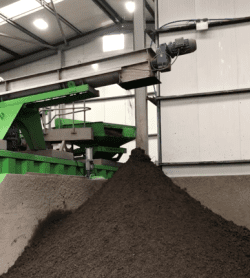
The UBU/Manchester Metropolitan University Knowledge Transfer Partnership (KTP) has reached a significant milestone with the finalisation of the chemical characterisation of recovered material (i.e. ‘filter cake’).
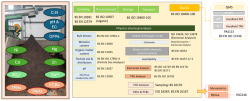
This extensive analysis has investigated a wide range of physical and chemical properties, including pH, water-soluble nutrients, metal(loids) and both legacy and emerging contaminants, ensuring a thorough understanding of the material’s composition and potential applications. The comprehensive findings have been compiled, marking a crucial step in the project’s progression towards a potential End-of-Waste status for the material[DN1] .
Scientific Contributions and Publications
The research generated through this KTP has led to significant academic contributions. A scientific article related to the KTP project is currently under review in the Journal of Environmental Management, with an additional two to three manuscripts in draft form. These publications are expected to enhance the body of knowledge on environmental risk assessment of ‘waste-derived’ material and sustainable waste management solutions.
Environmental and Human Health Risk
Final preparations are underway for the submission of End-of-Waste (EoW) application documentation. This application represents a pioneering effort to reclassify recovered road sweeping waste as a viable material for soil enhancement and urban greening. While the initial submission has been met with a requirement for further risk assessment, the project team remains optimistic about achieving a positive regulatory outcome.

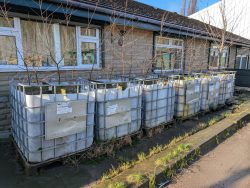
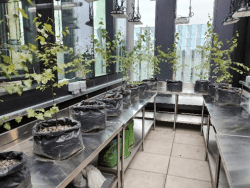
The project has conducted plant growth trials by monitoring 60 Silver Birches (Betula pendula) over-a full growth cycle (>12-months) to assess and compare recovered soils (and soil blends) with commercially available soils (BS3882 and BS8601) and impacts on root development and tree viability. Additional key experimental trials included impact studies on soil fauna (i.e. earthworms). The outcomes of these trials will contribute to ongoing risk assessments and the potential for wider material applications.

Environmental and Human Health Risk Assessment
Key experimental trials, such as the 12-month earthworm growth study, have been extended to cover a full biological growth cycle. Additionally, the project has conducted plant growth monitoring, assessing the impact of recovered materials on root development and tree viability. The outcomes of these trials will contribute to ongoing risk assessments and the potential for wider material applications.
Dissemination and Knowledge Transfer
Efforts to disseminate findings and transfer knowledge have been extensive. Outreach initiatives include presentations at international scientific conferences (i.e. SETAC, Spain and INEF, Galway), participation in the Greater Manchester Green Summit 2023 and 2024 and the production of promotional videos on platforms like Instagram and LinkedIn.
Furthermore, technical documents and standard operating procedures (SOPs) have been developed to facilitate training and knowledge embedding within UBU. The comprehensive dataset and related documentation has been compiled into a UBU-based database as a foundation for future work and as reference for company personnel.
Analytical Advances and Contaminant Profiling
The physico-chemical characterisation of the material has yielded critical insights into its composition of the recovered material. Investigations have included:
Project Wrap-Up and Future Continuation
Since its initiation in November 2022, the KTP has undergone extensive sampling campaigns, laboratory analyses, and regulatory engagement. As the project concludes in January 2025, work will continue to set-out and provide an ongoing Quality Management System (QMS) framework. This transition ensures the integration of best practices, in situ measurement techniques, and predictive modelling approaches into future research and development at UBU.
Next Steps and Long-Term Impact
Moving forward, the project will focus on:
Career Advancement and Research Leadership
A key outcome of the KTP is the professional progression of Dr Daniel Niepsch, who transitions from KTP Associate to Head of Research and Development at UBU. His role will focus on overseeing ongoing research, securing funding, and implementing innovative remediation strategies for waste-derived materials.

The UBU/MMU KTP has demonstrated the potential for transforming waste materials into valuable resources, aligning with circular economy principles and sustainable development goals. As the project moves forward, its findings and methodologies will continue to shape industry practices and environmental policies.
Express of Gratitude
To keep updated with our journey, please follow our socials: